The Writing Seminar 2027 will be dedicated to Creative non-fiction.
We will offer four writing workshops, led by Mark Axelrod-Sokolov, Guillaume Bernardi, Anna Citrino, Pasquale Verdicchio, plus one workshop on Italian diaspora creative non-fiction, led by Margherita Ganeri. We will offer also one optional workshop on non-fiction poetry, led by Stephen J. Cribari.
The two main writing workshops will be offered by Pasquale Verdicchio (1) and Anna Citrino (2).
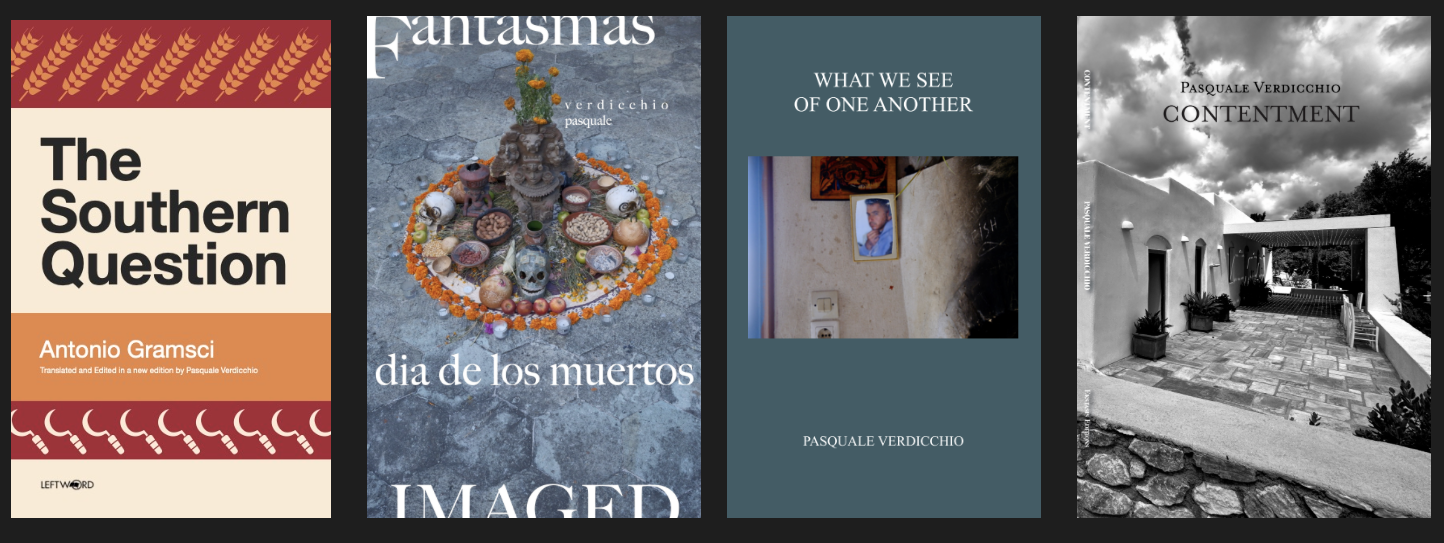
Pasquale Verdicchio is Emeritus Professor of Literature in the Dept. of Literature, Univ. of California, San Diego. Writer, literary critic, translator, and scholar, Verdicchio is the author of numerous collections of poetry, most recently Only You (2021), and Contentment (2024). As a translator, he has introduced many major Italian writers to English-language readers, such as Alda Merini, Pier Paolo Pasolini, Giorgio Caproni, Vivian Lamarque, and Antonio Gramsci. In addition, Verdicchio has written influential works of literary and cultural criticism, among them Bound by Distance: Rethinking Nationalism Through the Italian Diaspora (1997), Looters, photographers, and thieves: aspects of Italian photographic culture in the nineteenth and twentieth centuries (2011), and Ecocritical Approaches to Italian Culture and Literature: The Denatured Wild (2016). He was a founding member and twice served as president of the Association of Italian Canadian Writers, helping to establish Italian Canadian literature as a distinct field of study.
W1. Narrative (meets 4 times 2h each)
Through the accepted subgenres of Memoir, Travel, Nature, and Autobiographical writing, etc., the Non-Fiction Narrative workshop will explore the participants’ compositions and creative strategies in transforming real-life experiences into compelling narratives. Participants will share their work in a creative environment meant to offer constructive feedback. Through close reading, revision, and presentation, the workshop is meant to fine-tune each participant’s distinctive narrative style.
Anna Citrino grew up in San Diego County, California and taught abroad in international schools in the countries of Turkey, Kuwait, Singapore, Saudi Arabia, India and the United Kingdom. In 2019 she was nominated for a Pushcart Prize and her writing has been published in over forty journals. The author of Saudade, To Find A River, A Space Between, and Buoyant, Anna’s most recent book, Stories We Didn’t Tell, has won four awards, including the Western Heritage Award. Currently, Anna lives in Sonoma County, California where when not writing you might find her most any afternoon walking or biking along a trail with her husband, or tending plants in their garden accompanied by their cat. Read more of Anna's writing at annacitrino.com or follow her on instagram at annajcitrino.
W2. Discovering Connections: Writing Creative Nonfiction (meets 4 times 2h each)
This creative nonfiction workshop offers writers time to explore and reflect on their cultural heritages as well as connections and interest in Italian heritage and culture in diaspora. Participants will examine the environment of the workshop location, in addition to life events and memories that have shaped us. We’ll write pieces weaving together a real life story that uses facts and literary elements found in fiction and poetry to reflect on the meaning of things we’ve experienced. Workshop sessions will include generative writing time in response to prompts focused on exploring topics of belonging, connections to food and the senses, voices that have influenced us, observations of the natural world, and writing about travel and place. There’ll be time to discuss ideas, and to share and receive responses to our writing in a supportive environment.
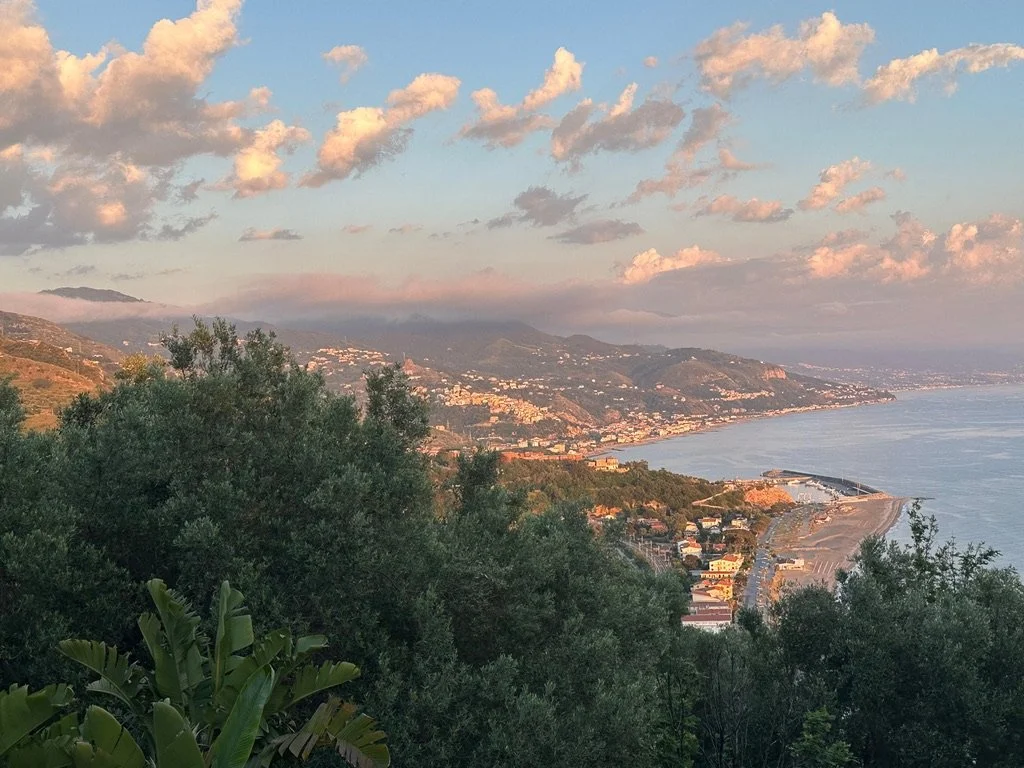
Ph. Julianna Forlano
Additional two workshops (W3, W4):
Mark Axelrod-Sokolov is a Professor of Comparative Literature at Chapman University, Orange, CA. Prior to teaching at Chapman he taught at the University of Minnesota, the University of East Anglia (UK) and Edinburgh University. He’s received Fulbright grants to study and/or teach at Oxford University, as well as Fulbright Specialist grants to teach in São Paolo, Stockholm, Torino, Aarhus (Denmark) and Athens. He’s been the Director of the John Fowles Center for Creative Writing for over two decades and has received four NEA grants for such. His last novel, The Mad Diary of Malcolm Malarkey, was published by Dalkey Archive Press in January 2023, and his novel, Cardboard Castles, was published by Old Lion Press, Kyiv in 2023. He has won over two dozen awards for his screenwriting and his work has been shortlisted twice by the Sundance Institute.
W3. Constructing dialogue (meets two sessions 2h each)
Constructing dialogue is, arguably, the most important aspect in screenwriting and, curiously, often the most ignored. Yet, there are techniques that one can rely on to write quality dialogue. Using extended clips from Rocky, Lolita, The Graduate, Pulp Fiction, Death in Venice, The Great Beauty, and The Count of Montecristo we will focus on the techniques involved in creating dialogue that sounds like authentic conversation.
Guillaume Bernardi is a Toronto-based stage director and teacher. His directing work covers a wide range of genres, from theatre and opera to movement pieces, with a strong focus on Italian opera. He is a Senior Scholar at York University, where he taught theatre for over twenty years. He has published extensively on Baroque theatre. He wrote The Man on Horseback, a documentary theatre piece based on family photographs and documents related to the author’s father stay in Ethiopia, during the Italian colonial occupation. A public presentation of the first half of the piece took place on October 3, 2025, at the Caminos Festival at Factory Theatre in Toronto.
W4. From Photographs to Diasporic Writing (meets two sessions 2h each)
The diffusion of photography coincided with the historical mass migrations of the late nineteenth century and early twentieth century, and photographs played a key role in recording and shaping those experiences. They were a way of keeping some memory of the places that have been left but also a way of sending back images to show the transformations in the lives of the migrants. In this workshop, we will explore how photographs can generate writing by exploring the physical reality of the photograph itself, but also the imaginary worlds that the photographs contain.
Please bring one or, preferably, a couple of photographs that you connect with your or your family’s experience of migration. The photographs can be personal family snapshots, but not necessarily so: they can also be of locations, objects etc., as long as they are evocative for you of the diasporic experience. Electronic copies of the photographs are perfectly fine.
W5. Literature
Margherita Ganeri is a full Professor of Contemporary Italian Literature at the University of Calabria.
She is the founding director of the Seminar Italian Diaspora Studies. She has an extensive record of publications on Italian and Italian diasporic literature in the 19th and 20th centuries, and on related issues of literary criticism and theory, with a predominant recent interest on Trauma Studies. She is on the board of directors of the journal «Moderna», and directs the book series Italian Diaspora Studies for the publisher Rubbettino. Receiver of two Fulbright fellowships, she was appointed visiting professor at Cambridge University (UK), Stony Brook University (NY, US), Italian School at Middlebury College (VT, US), University of Chicago (IL, US), Karl Ruprecht University of Heidelberg (DE), Seton Hall University (NJ, US), University of Saskatchewan (SK, CA), Fordham University (NY, US), The University of Toronto (ON, CA), and was an invited speaker at various conferences in Europe and Australia. She coordinates the annual Fulbright Lectureship in Italian American Culture and Literature at the University of Calabria.
W5. The South of Italy in Italian and Italian Diaspora non-fiction literature (meets three sessions 2h each)
This workshop will provide a glimpse into the South of Italy’s history, which includes massive waves of emigration, through the lenses of literature. We will address such crucial questions, as the so-called Southern Question, the definition of diasporic identity in relation to displacement, the internalized colonial orientalism, the definition of Italian Diaspora Literature, the importance of positionalities and the benefits of changing them. We will reflect on the mission of this seminar and on the relationships between reading, writing and the search for roots in order to liberate creative energy.
Session 1: The Southern Question in Italian Literature. Main Reference: Carlo Levi, Christ Stopped at Eboli.
Session 2: The South of Italy Seen from Abroad. Main Reference: Penny Petrone, Embracing Serafina.
Session 3: Literary Essays about the South of Italy. Various authors.
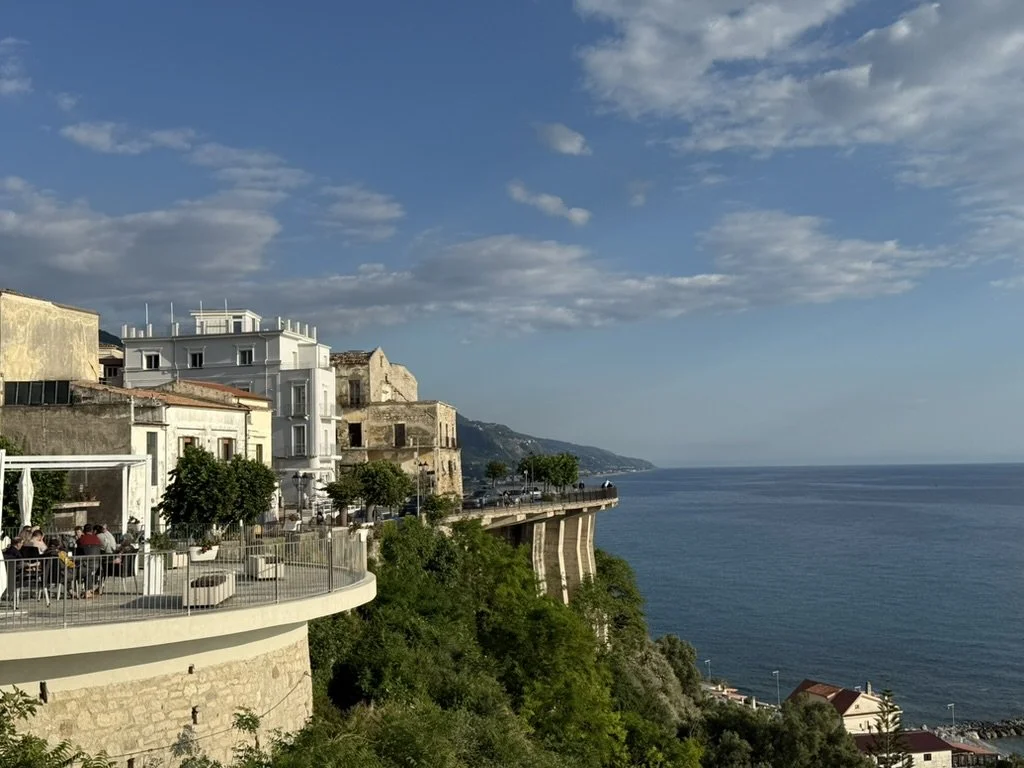
Ph. Julianna Forlano
Optional Poetry Workshop (W6)
Stephen J. Cribari’s poetry and plays have appeared in print and on stage in the United States and abroad. His poems have appeared in publications over several decades, most recently in Paterson Literary Review (2024); Freshwater Literary Journal (2025); Ganeri & Gillan eds., Writings from the Thyrrhenian Coast of Calabria (Rubbettino, 2025); The Bluebird Word (February, 2026 and forthcoming October, 2026); Fresh Words: Voices Unbound - an anthology of international poetry (2025); Ganeri, ed., At the Edge of the Tyrrhenian Sea (Rubbettino, 2026). His poem The Grammar Lesson was featured on Passager Magazine’s Burning Bright podcast, January 14, 2025. His verse novella Still Life and a collection of poems entitled Delayed en Route are published by Lothrop Street Press. In a parallel life he was a criminal defense attorney and law professor.
W6. Autobiographical poetry (meets 2 times 2h each and/or upon request by individuals or small groups participants).
Self-discovery, self-expression, letting the inner you speak and be heard: good reasons to let that raw, unedited voice find its way into a poem. But the unedited voice in all its rawness is just the beginning. The poet-autobiographer has to get her facts right, and you are the fact you have to get right. The process is confrontational, and it’s personal with risks. You will look at yourself as if you were looking at a stranger and you may end up admitting you weren't being as honest with yourself as you felt you were. Your poem will speak to someone else, and you must not mislead that person, intentionally or otherwise. You must get your words and your music exactly right.
This workshop takes a hard look at the self-editing process in autobiographical poetry. It asks questions such as: whose voice is the poem’s after it is untethered from the poet? What, exactly, do the words and the music of the poem convey to the reader? Is what your poem says worth saying? Is its music worth hearing? Is the “you” of your poem a person worth meeting?